
THE PHOTO BOOTH
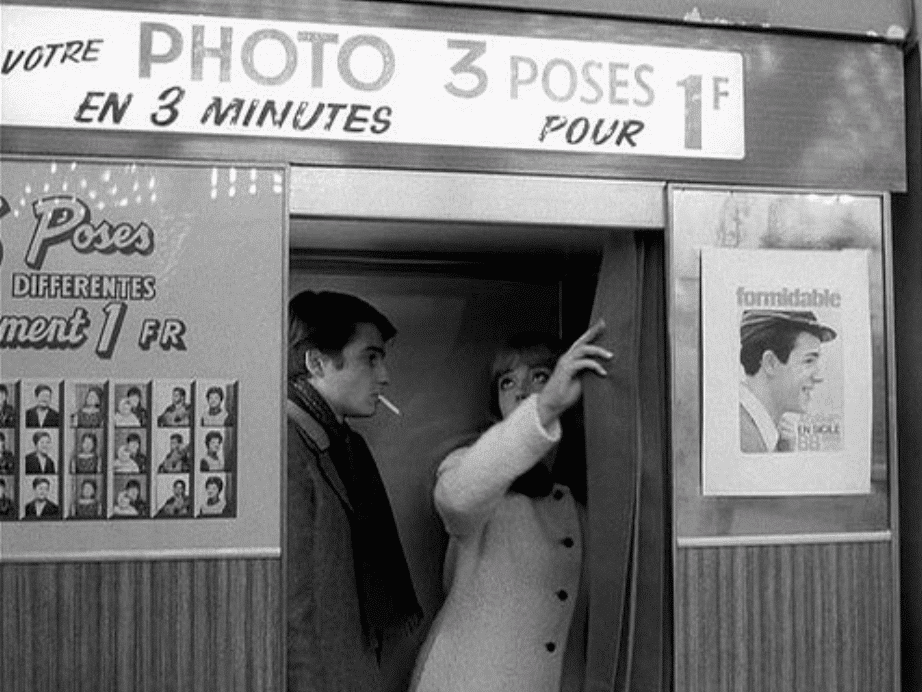
From the 1925 Revolution to the Exceptional Mobile Studio!
The history of analog photography and instant imaging is inseparable from an invention that radically changed our relationship with images: the photo booth.
Today, having evolved into a customizable, state-of-the-art and design-forward Photo Booth, this iconic machine draws its roots from a blend of technical ingenuity, complex chemistry, and a universal fascination with self-portraits.
Let’s look back at a century of evolution, from Broadway’s black curtain to the wooden Photo Booth by What The Fun, to understand how this automatic picture-taking machine became the star of our events.
1925: The Shock of the First Vintage Photo Booth
It all began in the creative effervescence of the Roaring Twenties in New York. Anatol Josepho, a visionary immigrant, installed the very first automatic photo booth on Broadway. Its success was immediate, almost irrational. For just 25 cents, passersby received a strip of eight portraits developed in only eight minutes.
This first vintage Photobooth was more than just a technical feat of an automatic camera; it was a true social revolution. For the first time in history, people could photograph themselves alone, without the judgmental gaze of a professional photographer, hidden behind a protective velvet curtain ensuring complete privacy. It was the official birth of photographic intimacy.
This retro Photo Booth then became the stage for the first funny faces, the most sincere smiles, and kisses captured on the fly. It created a new visual language, a unique black and white skin texture that transcended eras. Each shot was the result of a fascinating internal process, where the light of the magnesium flash marked the paper before it plunged into a secret developing bath.
The Golden Age of the Vintage Photo Kiosk: A Cult and Popular Object
For decades, this old Photo Kiosk became an essential part of urban furniture. From Parisian train stations to American arcades, it first established itself as an administrative necessity for official documents. But very quickly, the public reappropriated the machine to turn it into a popular pastime offering a tangible and immediate souvenir.
In the 50s and 60s, the art world embraced it. Figures like Andy Warhol saw it as a tool for serial creation, while later, cinema ultimately transformed this metal box into an object of major cultural curiosity and fascination.
The transition to digital in the 90s marked a definitive turning point. The Vintage Photo Kiosk began to move beyond subway corridors and into the event world. This is where the need for flexibility arose: brands and companies sought to appropriate this miniature photo studio to turn it into a high-performance event Photo Booth. The goal? To convey a strong brand image while offering a memorable and fun vintage animation.
The Digital Shift: The Era of Interactivity and Sharing
The turn of the 2000s marked the end of traditional chemistry in favor of high-resolution sensors. The Vintage Photo Kiosk became “smart.” The advent of touchscreens and ultra-fast processors allowed for the integration of entirely new Photobooth rental features.
Today, instantaneity meets prestige. Users can choose between sophisticated digital filters, printing in less than 10 seconds respecting the format of the four historical poses, and most importantly, immediate sharing on social networks.
But beyond technology, the immersive experience is now paramount. To stand out, the Photo Booth must once again become a beautiful object. This is the whole point of our approach: to offer a retro photo animation that sacrifices nothing to modernity.
We wanted the Photo Booth to once again be that exceptional studio that catches the eye as much as it flatters the face.
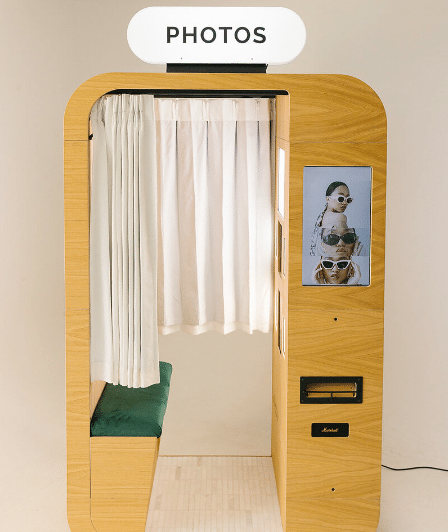
Design Evolution: The Wooden Photo Booth and the Return to Nobility
However, the omnipresence of plastic kiosks or basic “boxes” eventually tired an audience in search of authenticity. This is where What The Fun steps in to reinvent the experience. We took the opposite approach to industrial ephemerality, returning to the nobility of materials.
Our wooden Photo Booth is no longer just a machine; it’s an iconic studio. This return to aesthetic roots allows the booth to no longer be “hidden” in a corner, but to become the centerpiece of high-end decor. People no longer just seek the photo; they admire the object that creates it.
The Logistics Revolution: The 100% Dismountable Studio
The final chapter of this story is written under the sign of freedom. The main flaw of the traditional booth was its bulk. At What The Fun, we solved this complex equation: a Photobooth vintage in appearance, but completely modular in structure.
Completely dismountable, our Photo Booth frees itself from the constraints of the past. It can now be installed on a rooftop with narrow access, in a prestigious hotel suite, or in the heart of a crowded trade show. This agility makes it possible to offer a high-end photo studio experience where it was previously technically impossible.
The Photo Booth: The Pro Studio That Elevates the Selfie to Art
At What The Fun, we decided to bring this century-old story full circle. We’ve taken the codes of the original automatic picture-taking machine—elegance, the curtain, the solid appearance—and merged them with the demands of contemporary luxury. Our booth isn’t just a “photo box”; it’s an iconic, fully dismountable studio.
Whether for a product launch for one evening, a multi-day trade show, or a corporate event lasting an afternoon, this wooden Photo Booth adapts to any setting. It retains the soul of the retro photobooth and the magic of instantaneity, while adding an artistic dimension and unprecedented logistical flexibility. By elevating the selfie to art, we offer much more than entertainment: we offer a visual signature that enhances every glance and every event.